Quantitative Electroencephalography (QEEG): Interpretation and Training for a Range of Clinical and Peak Performance Conditions
For those interested in pursuing QEEG certification, this workshop (with 10 additional home-study hours) meets the didactic requirement by the International QEEG Certification Board (IQCB). Details coming soon.
Santiago Brand, Luciana Lorenzon, Antonio Martins-Mourao, Brendan Parsons, Ingrid Valentin
5-day Workshop
Data: April 12, 13, 14, 16, 17, 2027
Workshop Title
Quantitative Electroencephalography (QEEG): Interpretation and Training for a Range of Clinical and Peak Performance Conditions
Workshop Description
The emerging prominence of Quantitative Electroencephalography (QEEG) has revolutionized our understanding of brain dynamics, offering a powerful toolset to probe brain function, cognition, and psychopathological disorders. This workshop, valid for the QEEG certification aims to provide a comprehensive and hands-on exploration of QEEG methodologies, applications, and its potential impact on various domains of neuroscience and healthcare. The workshop will commence with an in-depth introduction to the principles and fundamentals of EEG and the transition to QEEG analysis. Participants will gain insights into signal acquisition techniques, electrode placements, and data preprocessing procedures, followed by an overview of the key concepts in quantitative analysis, including power spectral density, coherence, and phase synchrony. The main focus of the workshop will be on understanding how QEEG can be utilized to study various aspects of brain function and behavior. Different disorders are associated with specific QEEG patterns. Participants will delve into the investigation of QEEG-endophenotypes of brain disorders such as ADHD, dyslexia, anxiety and many others. Attendees will have the opportunity to explore case studies and practical scenarios that demonstrate QEEG’s potential to assist in the management of several conditions. Practical sessions will be a crucial part of the course, allowing participants to work with real EEG datasets and QEEG analysis software. Hands-on exercises will help participants develop proficiency in applying QEEG techniques and interpreting results. The workshop is tailored to professionals and students seeking to expand their knowledge and expertise in the realm of QEEG.
Learning Objectives
1) Participants will be able to demonstrate an understanding of the fundamental principles and concepts of QEEG analysis.
2) Participants will understand how to preprocess raw EEG data for reliable QEEG analysis by removing artifacts and reducing noise.
3) Participants will be able to recognize various spectral and temporal analysis methods to EEG data, including power spectral, coherence and phase synchronization.
4) Participants will start to analyze QEEG data and results to find neuromarkers linked to brain disorders, assess treatment impacts, and suggest informed steps for therapy or more study.
About Santiago Brand
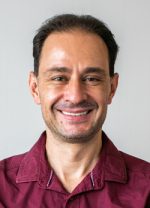
Santiago Brand, BCN, BCB, QEEGDL is the founder and director of MindLab Neuroscience Consulting in Singapore. Santiago is a clinical and sport psychologist board certified in qEEG brain mapping, biofeedback and neurofeedback. He is an educational instructor for InMindOut centers in the United States and faculty member at the “Learn From The Best ” program of the Biofeedback Federation of Europe (BFE). Santiago is a scientific advisor for iMediSync in South Korea, NEUROWYZR in Singapore and 180 Sanctuary in Thailand. Santiago has 15 years of experience working with sports and peak performance and he has lectured in 20 countries. Santiago has been interviewed in multiple media outlets including CNN as well as being a frequent guest host in the NueroNoodle Podcast and the How To Live Podcast.
About Luciana Lorenzon
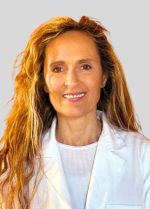
Luciana Lorenzon is a Clinical Psychologist, Psychotherapist. Certified instructor for BFE and BCIA mentor for Neurofeedback. Qeeg Diplomat and provider of Didactic Training recognized by the International QEEG Certification Board (IQCB).
Founder of CINB Centro Italiano di Neurofeedback e Biofeedback and member of the International Liasons of the Applied Psycophysiology Education (Aped) program. As the head of the biofeedback and neurofeedback service at ISmerian, Institute of Regenerative Medicine and Anti-Aging in Treviso, her current focus involves complex assessment methods combining QEEG brain imaging with holistic health and nutritional bioclinical analysis in diagnosing and treating mental disorders, as well as evaluating the effectiveness of biofeedback, neurofeedback and lifestyle modifications. She is responsible for the Psychophysiology unit of the BFE Center of Excellence “Medicina e Sviluppo” in Treviso, Italy where she combines applied neuroscience with cognitive behavioral therapy and mindfulness. She worked as a Clinical Psychologist and Neuropsychologist in a rehabilitation and research center for diagnostic and treatment of children and adult with a wide range of difficulties including adhd, autism, concussion/brain injury, depression and anxiety. In her clinical practice, she has successfully treated patients with a wide variety of conditions using QEEG-based diagnosis, biofeedback and neurofeedback.
Her current focus includes a more complex assessment approach that combines functional brain imaging (qEEG) techniques and “omics” strategies in the diagnosis and treatment of mental disorders and the effectiveness of the combination of Biofeedback, Neurofeedback and lifestyle modifications.
She is a member of the Board of Directors of SINQ (Italian Society of Neurofeedback and qEEG) and is the BFE Advisory Board Vice President.
About Antonio Martins-Mourao
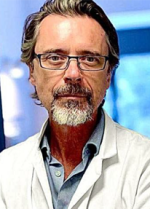
Dr Antonio Martins-Mourao is a clinical psychologist and neuro-psychophysiologist with more than 25 years of experience across psychology, psychophysiology and neuroscience. He holds a PhD from University College London and is Clinical Director of London Scientific Neurotherapy.
His clinical work focuses on complex and persistent difficulties where symptoms, diagnosis and treatment response do not always provide a complete explanation. He brings psychological understanding together with QEEG brain mapping and functional neurophysiology to build a more individual picture of each patient — without losing their development, history, experience or the meaning of their symptoms.
Dr Martins-Mourao formerly lectured in Psychophysiology and Mental Health at The Open University, where he established the QEEG & Brain Research Lab and developed research into neurophysiological patterns associated with anxiety-related disorders. He has trained mental-health professionals internationally in QEEG and brain-informed clinical work since 2011.
He is an Associate Fellow of the British Psychological Society and a Chartered Psychologist, a Fellow of the Higher Education Academy, and a member of the British Neuroscience Association and the Society for Applied Neuroscience. He is also co-author of Alpha-Theta Neurofeedback in the 21st Century: A Handbook for Clinicians and Researchers and serves on the advisory board of the Foundation for Neuromodulation & Neurofeedback Research in the United States.
His work is guided by a simple clinical question: when the symptoms are clear but the outcome still does not make sense, what are we not yet seeing?
About Brendan Parsons
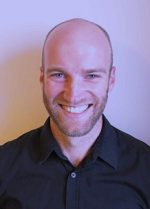
Brendan Parsons, M.Sc., Ph.D., BCN, has a doctorate in psychology – neuropsychology and cognitive science from the University of Montreal. Certified “BCN” since 2009, he has a decade and a half’s worth of experience in the fields of biofeedback and neurofeedback. Extremely lucky to have been a part of the BFE early in his career, he had the lucky opportunity to be trained by world-recognized experts such as Dr. Robert Thatcher, Drs Lynda and Michael Thompson, Dr. Paul Swingle, Dr. Johanne Levesque and Dr. Mario Beauregard.
His experience in biofeedback and neurofeedback applications extend to athletic domains (with the Vancouver Canucks of the National Hockey League, Olympic and Paralympic athletes from Canada, the United States and Sweden), to that of business and leadership performance (for example with the International Consortium of Master of Business Administration; CIMBA).
His preferred practice and specialty remain clinical applications. He works with children, adolescents and adults; AD/HD (attention deficit/hyperactivity disorder), ASD (autism spectrum disorder), learning disabilities, emotional and behavioural regulation problems (anxiety, post-traumatic stress disorder – PTSD, depression, obsessive-compulsive disorder – OCD), chronic pain, sleep disorders, tinnitus…
For years, Brendan worked at Neurodezign, a leading clinical practice in Quebec, Canada. There, he became an expert in neurofeedback and in qEEG interpretation, helping design and implement the methods utilized in this practice and in a number peer-reviewed research studies demonstrating the efficacy of neurofeedback and other related neuroscientific techniques.
He is a proud member of the BCIA since 2009. He is also proud to have contributed to the development of the Biofeedback Foundation of Europe in his early days in the field. Since 2010, he has taught various levels and methods of biofeedback and neurofeedback to professionals around the world.
Concerned with the growth of the field and the need for robust empirical support for applied techniques, he has contributed to several clinical research studies and continues to be involved in ongoing works in collaboration with a number of Canadian universities.
Co-founder of the first company to offer a French-language BCIA-certified neurofeedback course in France, he is currently invested in the development of NeuroLogic, his latest co-founded project. His mission remains helping professionals in various fields integrate evidence-based neurofeedback techniques into their practice.
About Ingrid Valentin
Ingrid Valentin has an MSc in Clinical Psychology and a postgraduate in Integrative Psychotherapy and has been working with neurofeedback since 2013.
In 2017, along with Philippe Pascal, she founded the company NeuroVP, which now counts 5 offices, a remote neurofeedback branch and 8 colleagues.
Since 2022, Ingrid is a certified BCIA-mentor and supervisor in neurofeedback. Ingrid specializes in QEEG and neurofeedback for anxiety disorders, complex PTSD, and attention issues.